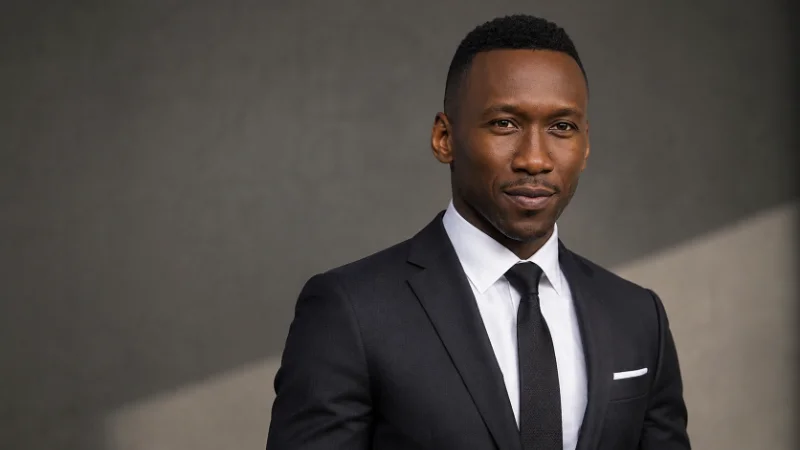
Mahershala Ali is a two-time Academy Award winner known for Moonlight, Green Book, and a run of prestige film and television roles that few actors of his generation can match. He built that reputation slowly, through television bit parts, a breakout turn on House of Cards, and a string of choices that favored craft over franchise paychecks, at least until Marvel came calling.
Early Life And The Path Into Acting
Ali was born Mahershalalhashbaz Gilmore on February 16, 1974, in Oakland, California. His mother had worked as a Catholic school teacher, and his father worked in construction before later pursuing dance and performance in New York.
He arrived at St. Mary’s College of California on a basketball scholarship and majored in mass communications, not drama. Acting only became a serious pursuit once he saw a campus production and realized performance offered him something sports could not: a way to inhabit other people’s lives without losing his own competitive drive.
That realization sent him to the Tisch School of the Arts at New York University for a Master of Fine Arts in acting. His classmates there included several performers who would go on to their own recognizable careers, and the training gave Ali a theater actor’s discipline that shows up in how deliberately he still builds a character today.
Basketball still comes up in how Ali talks about performance. He has described acting as a similarly physical discipline, one where preparation, timing, and reading another person’s movement matter as much as memorizing lines. That grounding partly explains why directors keep casting him in roles that ask for controlled physicality, from the quiet menace of a drug dealer to the choreographed stunt work he took on decades later.
1. Building A Career Through Television
Ali’s first steady work came on network television. He had a recurring role on Crossing Jordan starting in 2001, followed by a stint on Threat Matrix, before landing a more prominent part as Richard Tyler on the science fiction drama The 4400, which ran from 2004 to 2007.
Film roles came in parallel but stayed modest for years. He appeared in David Fincher’s The Curious Case of Benjamin Button in 2008 and later joined the final two installments of the original Hunger Games series. Those parts put him in front of large audiences without asking him to carry a film, which in hindsight looks like exactly the kind of patient positioning that let him choose his later roles on his own terms.
The real turn came with House of Cards. Playing lobbyist Remy Danton on the Netflix political drama earned Ali his first Primetime Emmy nomination and introduced him to a wider audience that had not yet clocked his name. Around the same period, he took on a very different register as Cornell “Cottonmouth” Stokes in Marvel’s Luke Cage, a role that showed off a menace and physical stillness he had not gotten to use on network TV. Ali’s House of Cards breakthrough put him in a cohort of classically trained actors who anchored Netflix’s prestige dramas, alongside performers like Laura Linney, who led Ozark for the streamer after years on stage and screen.
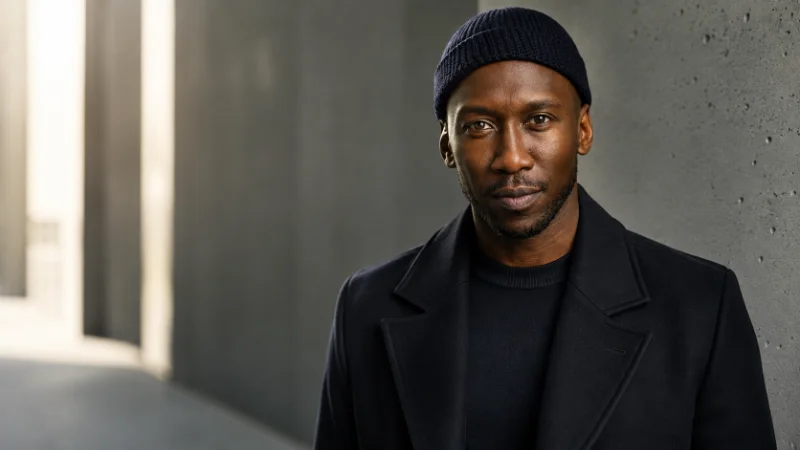
What stands out about that stretch of his career is how little overlap there was between the parts. Remy Danton is a Washington operator who trades in favors and calculation. Cottonmouth is a Harlem nightclub owner who mixes charm with sudden violence. Playing both within a few years of each other told casting directors that Ali could carry very different kinds of authority, which set up the range he would show off once awards-season roles started coming his way.
Moonlight, Green Book, And Two Academy Awards
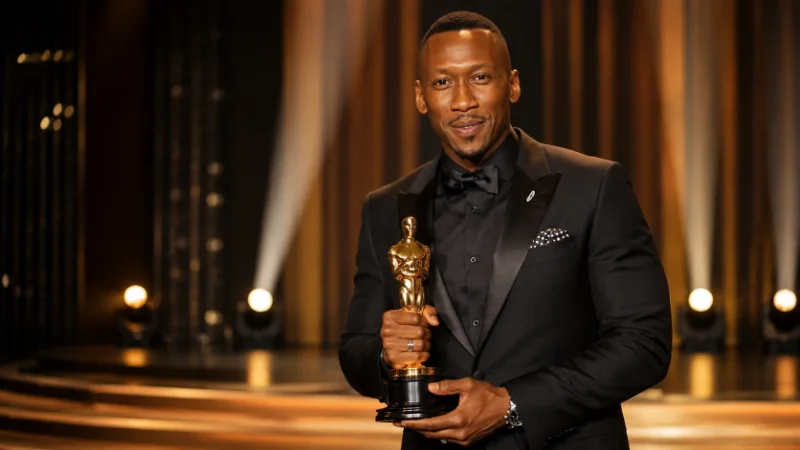
Ali’s supporting performance in Barry Jenkins’ Moonlight in 2016 changed the shape of his career. Playing Juan, a father figure to a struggling young boy in Miami, he brought a tenderness to a role that could easily have leaned on stereotype, and it won him the Academy Award for Best Supporting Actor. He became the first Muslim actor to win an Oscar for acting.
Two years later, he won the same category again for Green Book, playing pianist Don Shirley opposite Viggo Mortensen. The back-to-back wins made him the first Black actor to win two Academy Awards in the same acting category and only the second Black actor to win multiple competitive acting Oscars.
The two performances sit next to each other well because they show different sides of the same instrument. Juan is quiet and watchful. Don Shirley is precise, formal, and guarded in public while quietly lonely in private. Both readings depend on restraint rather than volume, which has become something of a signature for Ali.
By 2019, Ali had accumulated 14 award nominations across his film and television work, along with a BAFTA, two Golden Globes, and three Screen Actors Guild Awards on top of the two Oscars. That volume of recognition in less than a decade is unusual for an actor who spent the first ten years of his career mostly in supporting television roles rather than headline film parts.
1. Expanding Into Prestige Television And Franchise Work
Ali kept working across formats rather than settling into one lane. He starred as Detective Wayne Hays in the third season of HBO’s True Detective in 2019, a performance that spans several decades of the character’s life and earned him another Emmy nomination. The following year, he joined the second season of the Hulu series Ramy, and he executive produced the short documentary We Are the Dream: The Kids of the Oakland MLK Oratorical Fest, which won a Primetime Emmy for Outstanding Children’s Program.
He also stepped into bigger franchise territory. Ali played Aaron Davis, the Prowler, in Spider-Man: Into the Spider-Verse and its sequel Spider-Man: Across the Spider-Verse, gave a physically demanding lead performance in Alita: Battle Angel, and appeared in the Apple TV Plus limited series The Underground Railroad, directed by Barry Jenkins. In 2023, he starred in Leave the World Behind for Netflix, and in 2025 he played Duncan Kincaid in Jurassic World Rebirth, a role that put him back in front of a mainstream summer audience.
That stretch of work shows a pattern worth naming directly. Ali alternates a large studio release with a smaller, character-driven project almost every year, rather than chasing one or the other exclusively. Jurassic World Rebirth sits next to Leave the World Behind on his résumé the same way Alita: Battle Angel once sat next to True Detective, a lead performance in a modest, tense drama built almost entirely around dialogue and silence. The rotation keeps him visible to a mass audience while protecting the kind of roles that earn him nominations.
The Blade Question And Why He Has Moved On
For several years, Ali’s name was tied to Marvel’s long-delayed Blade reboot, which he was announced to star in back in 2019. The project cycled through directors and rewrites, including a period when Bassam Tariq, the filmmaker behind Your Mother, Your Mother, Your Mother, was attached to direct it. Tariq left the production in 2022, reportedly weeks before filming was set to begin, and the film has remained unmade since.
Ali has said publicly that he considers the chapter closed, framing the decision to not move forward as one that rested with Marvel rather than with him. He has described feeling ready to stop answering questions about a movie that never got made, while noting that the studio, not the actor, controlled whether it happened.
Marvel Studios president Kevin Feige has acknowledged the project’s failure to launch, saying the script never developed from good to great and that he felt he had let Ali down personally by not getting the film off the ground. For Ali, the more interesting outcome of that unfinished chapter turned out to be professional rather than personal. Tariq, freed from the Blade rewrites, wrote and directed Your Mother, Your Mother, Your Mother instead, and Ali signed on to star in it, effectively converting years of stalled preparation into a different film altogether.
What Mahershala Ali Is Working On Now
Ali’s next lead role is in Your Mother, Your Mother, an action drama written and directed by Tariq. He plays Latif, a religious hitman who has to raise his children alone across Houston after his wife’s death, doing his own stunts, including sword work along the way. The film premieres at the Toronto International Film Festival in September 2026 before opening in New York and Los Angeles on September 25, with a wider release to follow in October.
He is also set to voice Brenden in Laika’s stop-motion feature Wildwood, based on Colin Meloy’s novel, alongside Awkwafina and Angela Bassett, and he is reprising Aaron Davis in Spider-Man: Beyond the Spider-Verse, the closing chapter of the animated trilogy.
Taken together, those three projects show him working in three different modes at once: a gritty, R-rated action lead in Your Mother, Your Mother, Your Mother, a voice performance aimed at family audiences in Wildwood, and a supporting turn in one of the biggest animated franchises currently running in Spider-Man: Beyond the Spider-Verse. Few actors his age keep that wide a spread of projects moving at the same time, and it echoes the same instinct that shaped his early career, taking on parts that stretch different muscles rather than repeating what already worked.