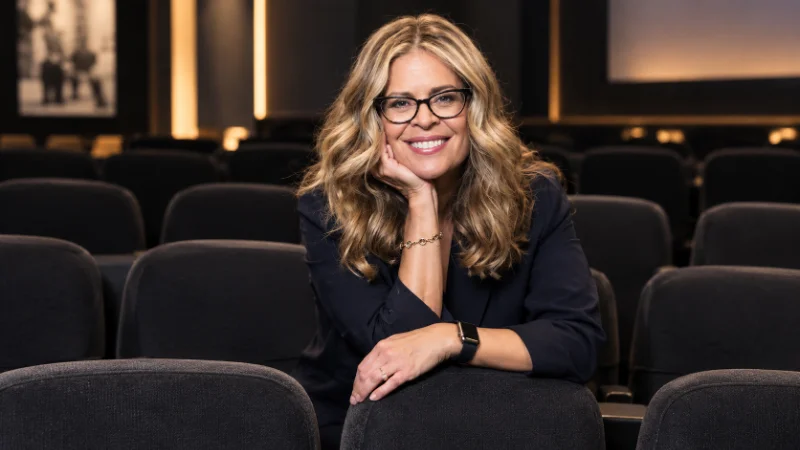
Jennifer Lee wrote and directed Frozen, the film that made “Let It Go” inescapable and turned her into the first woman to direct a Walt Disney Animation Studios feature. What makes her story unusual isn’t just that one film. It’s the path she took to get there, and the fact that after running the entire studio as its chief creative officer, she chose to step back down into the director’s chair on purpose.
| Category | Details |
|---|---|
| Full Name | Jennifer Michelle Lee (born Rebecchi) |
| Born | October 22, 1971, Rhode Island, U.S. |
| Age | 54 |
| Occupation | Screenwriter, film director, producer, playwright |
| Education | University of New Hampshire (BA, English); Columbia University (MFA, Film) |
| Years Active | 2004 to present |
| Known For | Writer/director of Frozen (2013) and Frozen II (2019) |
| Employer | Walt Disney Animation Studios (2011 to present) |
| Notable Title | Chief Creative Officer, Walt Disney Animation Studios (2018–2024) |
| Spouse | Robert Joseph Monn (m. 1999, divorced); Alfred Molina (m. 2021) |
| Children | 1 |
| Major Award | Academy Award for Best Animated Feature, Frozen (2013) |
| Net Worth | Estimated at $12 million (unconfirmed, per celebrity finance trackers) |
| Upcoming Project | Writing and directing Frozen 3 (2027) |
A Late Start, Not a Childhood Dream
Lee was born Jennifer Michelle Rebecchi on October 22, 1971, and raised in Rhode Island. Sources differ on the exact town, with some naming Barrington and others East Providence, but all agree she grew up in the state and was, by her own description, a band kid rather than an aspiring filmmaker.
She studied English at the University of New Hampshire, then moved to New York and worked in publishing, first as a graphic designer at Random House and later at Time Life. Filmmaking wasn’t part of the plan until her thirties, when she went back to school for an MFA in film at Columbia University, graduating in 2005.
At Columbia, Lee won the William Goldman Award for screenwriting and saw her script Hinged on Stars take the Columbia University Film Festival prize. Her original screenplay The Roundup later became a quarter-finalist in the Nicholl Fellowships and was optioned by Appian Way, Leonardo DiCaprio’s production company. None of that guaranteed a career in animation. It just kept the door open.
The gap between her age and her peers when she started is part of what makes her career worth studying. Most people who direct a major animated feature spend their twenties working their way up through storyboarding or character animation. Lee spent her twenties in publishing, came to screenwriting close to 30, and didn’t direct her first film until she was in her forties. Her path into animation ran through live-action screenwriting training, not through the animation pipeline itself, and that outsider’s training is part of why she later described her approach to story as starting from character and emotion rather than from spectacle.
An Eight-Week Job That Became a Career
That open door led to Disney. In 2011, Phil Johnston, a former Columbia classmate, called Lee about a short-term writing job on Wreck-It Ralph. She arrived in Los Angeles as a divorced single mother expecting to stay two months. Instead, the studio asked her to stay through the film’s completion, and she earned a co-writing credit on the 2012 hit.
That assignment put her in the room for what came next: a stalled animated feature loosely based on Hans Christian Andersen’s The Snow Queen. Disney had spent years trying to crack the story, and earlier drafts kept Elsa as a villain in the Andersen tradition. Lee took over the script and reshaped it around the bond between two sisters instead of the fairy tale’s stranger-danger plot, turning the ice queen from an antagonist into a frightened sister trying to protect the people she loves by pushing them away. The film became Frozen.
Making Frozen History
Frozen opened in 2013 with Lee credited as sole screenwriter and co-director alongside Chris Buck, making her the first woman to direct a feature for Walt Disney Animation Studios. The film grossed more than 1.2 billion dollars worldwide and won the Academy Award for Best Animated Feature, along with a second Oscar for the song “Let It Go.”
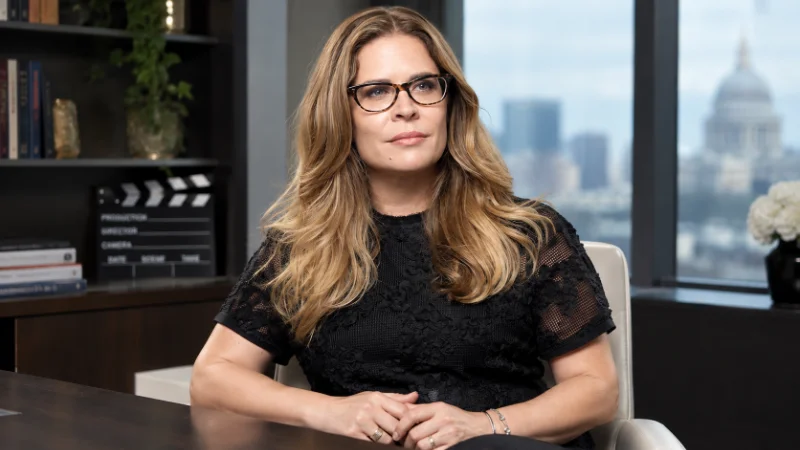
The scale of that success is easy to state and harder to convey. Frozen didn’t just perform well at the box office. It reshaped Disney’s marketing calendar, filled theme park lands, and made Lee, almost overnight, one of the most closely watched creative voices in American animation.
She followed it with story and writing credits on Big Hero 6 in 2014 and Zootopia in 2016, both of which went on to win the same Oscar category Frozen had claimed. Few writers get to be part of three Best Animated Feature winners in a row at the same studio.
Frozen II and the Move Into Leadership
Lee returned to write Frozen II on her own, working from a story she developed with Marc Smith, Kristen Anderson-Lopez, and Robert Lopez, and again co-directed with Buck. Released in 2019, the sequel earned 1.45 billion dollars worldwide, making Lee the first woman to direct two films that each crossed the billion-dollar mark.
In between the two Frozen films, Disney Animation went through a leadership crisis when longtime chief creative officer John Lasseter left the company in 2018 following misconduct allegations. Disney named Lee as his replacement, making her the studio’s first female chief creative officer, a job she took on while still finishing Frozen II.
Six Years Running Walt Disney Animation Studios
As chief creative officer from 2018 to 2024, Lee oversaw the greenlighting and creative direction of Ralph Breaks the Internet, Raya and the Last Dragon, Encanto, Strange World, and Wish, along with an expansion into Disney+ series such as Baymax, Zootopia+, and Iwaju. Encanto alone won Disney Animation its fourth Oscar in eight years under her tenure.
The run wasn’t uniformly smooth. Strange World and Wish both underperformed at the box office, and industry coverage at the time described the job as demanding on both the creative and business sides. Lee has spoken publicly about the pressure of following Frozen’s success while trying to keep the studio’s slate fresh rather than chasing a formula.
The job also put her in a position few writers ever occupy: greenlighting other people’s stories instead of just telling her own. She had to decide which ideas got a budget, which directors got a second film after a rocky first one, and how far the studio could push into streaming without diluting what a theatrical Disney Animation release was supposed to feel like. That mix of creative and business judgment is a different skill set from writing a script, and it’s part of why her tenure gets debated by industry watchers rather than simply praised or dismissed.
Stepping Down to Step Back Into Directing
In September 2024, Lee did something unusual in Hollywood. Instead of climbing further up the corporate ladder, she stepped down as chief creative officer to write and direct Frozen 3, handing the CCO role to Jared Bush, the filmmaker behind Encanto and Zootopia. She is also writing Frozen 4 alongside Marc Smith and will executive produce that film.
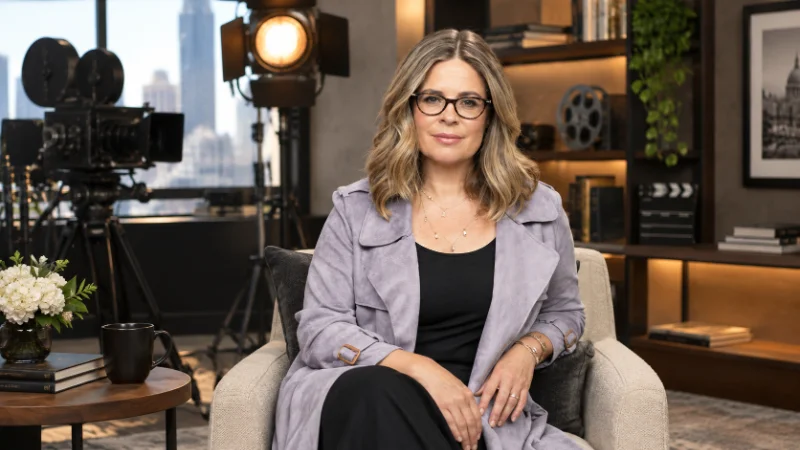
Disney has confirmed Frozen 3 for a November 24, 2027 theatrical release, with Trent Correy co-directing alongside Lee and Kristen Bell, Idina Menzel, Jonathan Groff, and Josh Gad all returning to voice Anna, Elsa, Kristoff, and Olaf. At D23 in August 2026, Disney showed concept art and confirmed the story centers on a wedding in Arendelle, though full plot details remain under wraps.
Personal Life
Lee’s daughter was born during her first marriage, to Robert Joseph Monn, whom she divorced before joining Disney. Lee has said she arrived in Los Angeles for the Wreck-It Ralph job as a single mother of a seven-year-old, a detail that shaped how she talks about balancing a demanding career with raising a child.
She began a relationship with actor Alfred Molina, who voiced King Agnarr in Frozen II, during that film’s production. The couple entered a domestic partnership in 2019 and married in 2021.
Lee is also a Tony-nominated writer, having co-written the book for the Broadway musical adaptation of Frozen, which extended the story beyond film and into live theater.
Awards and Recognition
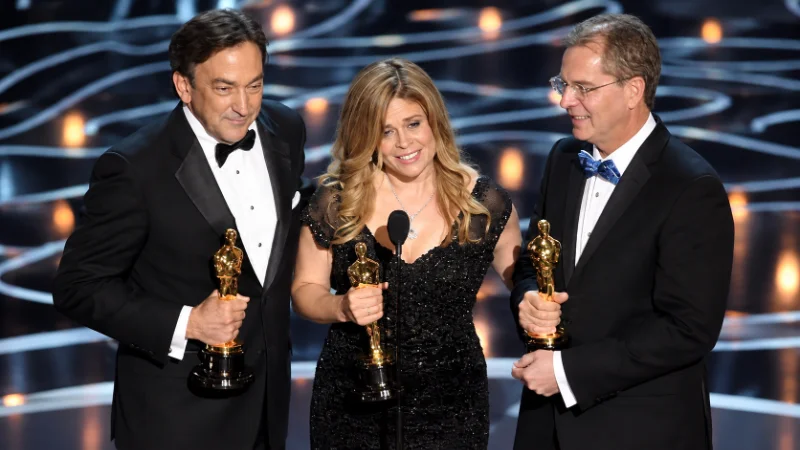
Lee’s Academy Award for Best Animated Feature came for Frozen in 2014, shared with co-director Chris Buck and producer Peter Del Vecho. She has also received a BAFTA Award and an Annie Award, with additional nominations in both categories for her later work. In 2022, the Annecy International Animation Film Festival gave her an Honorary Cristal for her body of work and studio leadership.
What Jennifer Lee’s Net Worth Looks Like
Disney does not publish individual creative-executive salaries, so there is no officially confirmed net worth figure for Lee. Celebrity finance sites that track industry compensation have put her personal net worth at roughly 12 million dollars, an estimate rather than a confirmed figure, built from her decade at Disney as a writer, director, and studio executive rather than any single disclosed paycheck.
Why Jennifer Lee’s Career Stands Out
Most Hollywood careers move in one direction: up, and then a step into a bigger office. Lee’s has moved in a loop instead. She left publishing for film in her thirties, left screenwriting for directing, left directing for running an entire studio, and then walked back down from that studio’s top job specifically to direct again.
That loop is why her career gets studied beyond the box office numbers. Frozen changed what Disney Animation’s musicals could be about, shifting the genre’s default love story into a story about sisters, and that shift is visible in how later Disney and non-Disney animated films have leaned on family and sibling relationships rather than romance as their emotional core. Her tenure as chief creative officer, whatever its box office misses, put a woman in charge of one of the most culturally influential studios in the world for six consecutive years, at a moment when the studio badly needed stable, trusted leadership after Lasseter’s exit.
She’s also become a reference point for a specific kind of career move that Hollywood doesn’t see often: choosing to go back to a smaller, more hands-on job after reaching the top of the org chart. Executives who reach chief creative officer or studio head rarely step back down voluntarily, and doing so to write and direct rather than to retire or take a rival offer is even rarer. Whether or not Frozen 3 repeats the first two films’ success, that decision alone has already shaped how people in the industry talk about what counts as career progress. Her decision to trade a corner office for a director’s chair again suggests she measures her own career less by title than by the story she’s currently trying to tell, which, as of this year, is how Anna and Elsa’s story ends.