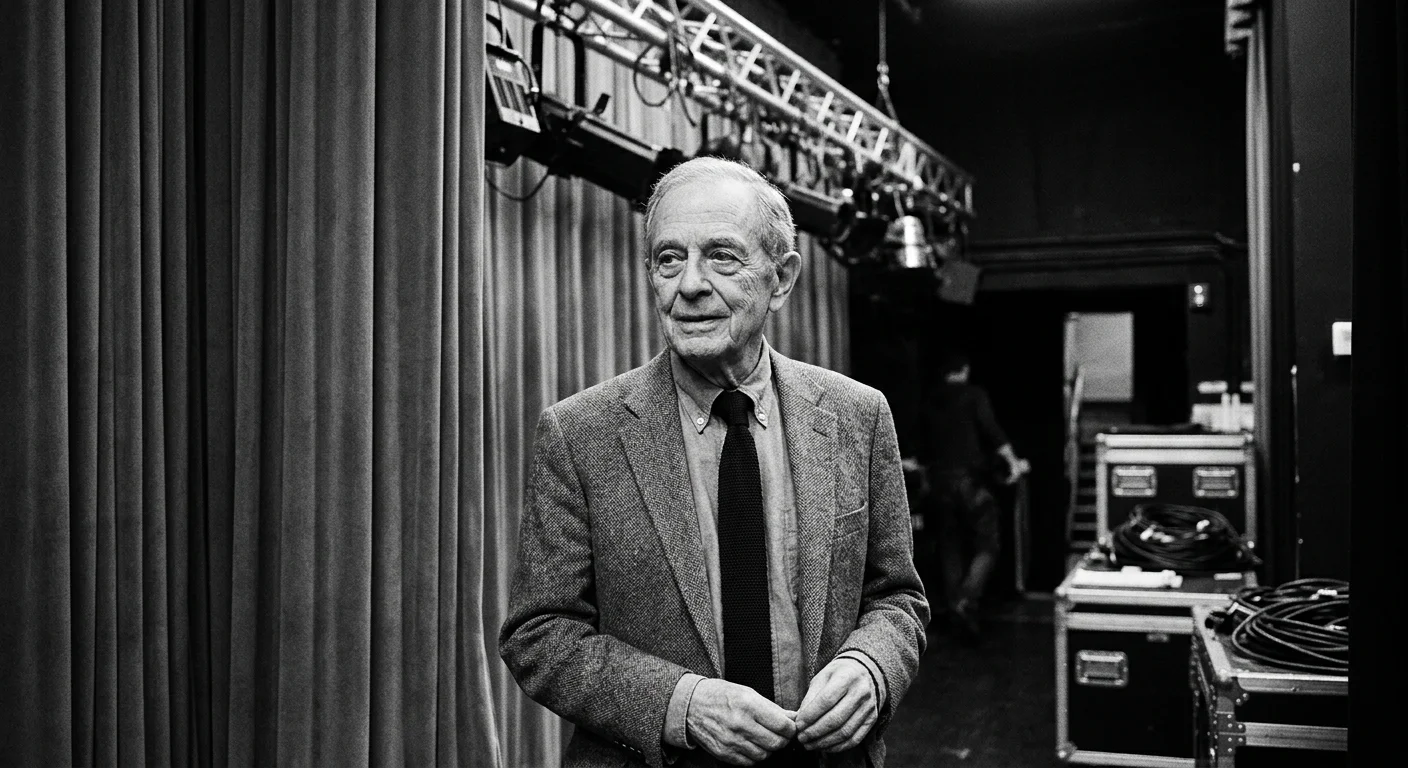
Jerry Adler had a net worth of $4 million at the time of his death, according to Celebrity Net Worth. The actor and former stage manager, best known for playing Hesh Rabkin on “The Sopranos,” died on August 23, 2025, at the age of 96, closing out a career that spanned more than seven decades in theater, film, and television.
Quick Facts
| Detail | Information |
| Full Name | Jerry Adler |
| Born | February 4, 1929, Brooklyn, New York |
| Died | August 23, 2025 (age 96) |
| Net Worth | $4 million |
| Profession | Actor, stage manager, director |
| Known For | Hesh Rabkin on “The Sopranos” |
| Years Active | 1950s (theater) to 2020s (acting) |
Early Life in Brooklyn
Jerry Adler was born on February 4, 1929, in Brooklyn, New York, to Pauline and Philip Adler. He came from a family with deep roots in Yiddish theater. His father worked as a theater manager, and his cousin was Stella Adler, the acting teacher whose students included Marlon Brando. He grew up in a Yiddish-speaking Jewish household surrounded by the sounds and rhythms of the New York stage.
He attended Tilden High School, where he served as president of the Dramatic Club. That early pull toward performance did not translate into an acting career right away. Instead, Adler spent his first several decades working behind the curtain rather than in front of an audience.
Decades as a Broadway Stage Manager
Adler’s professional life began in 1950, when he took a job as an assistant stage manager on the Broadway musical “Gentlemen Prefer Blondes.” From there, he built a reputation as a meticulous production supervisor and stage manager on a long run of Broadway hits, including “Of Thee I Sing” and “My Fair Lady.”
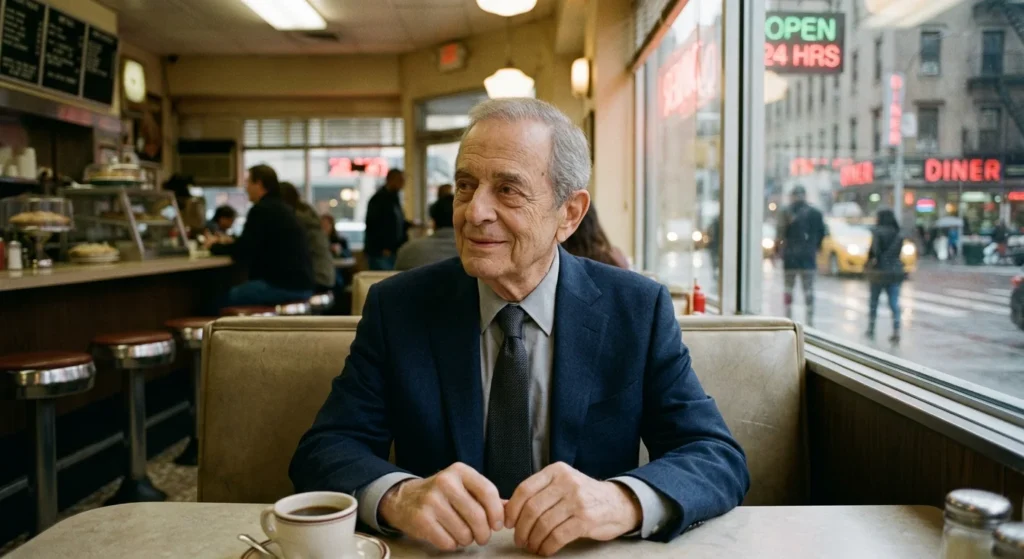
He eventually moved into directing, making his Broadway directorial debut in 1974 with “Words and Music,” a revue built around the songs of Sammy Cahn. For roughly forty years, Adler worked almost entirely offstage, managing productions and shaping other performers’ work rather than his own. He did not step in front of a camera in a credited acting role until he was in his early sixties, a detail that sets his career apart from most actors of his generation.
The Late-Career Breakthrough
Adler made his television acting debut on the CBS series “Brooklyn Bridge” in 1991, playing a grandfather figure that drew on decades of lived New York experience. From there, he picked up recurring roles on “Hudson Street,” “Alright Already,” and “Raising Dad,” steadily building a second career as a character actor well into his sixties and seventies.
His film work during this period included “Manhattan Murder Mystery,” “In Her Shoes,” “A Most Violent Year,” and “Synecdoche, New York.” Speaking with The Hollywood Reporter in 2017, Adler described the shift from working backstage to being recognized in public as disorienting after decades of anonymity, saying that stepping into television made him a familiar face almost overnight.
Hesh Rabkin and The Sopranos
Adler’s defining role came in 1999, when he was cast as Herman “Hesh” Rabkin on HBO’s “The Sopranos.” Hesh was a former music industry figure and longtime confidant to James Gandolfini’s Tony Soprano, offering the mob boss counsel that mixed loyalty with dry humor. The role ran across much of the series’ run and introduced Adler to a mainstream audience for the first time in his career. Adler’s Hesh became one of the defining supporting turns of HBO’s first prestige-television wave, a tradition the network carried forward with actors like Mahershala Ali leading the third season of True Detective.
Other Television and Film Roles
Beyond “The Sopranos,” Adler built a long list of recurring television credits. He played Howard Lyman, a sharp-tongued law partner, on “The Good Wife” and later “The Good Fight.” On FX’s “Rescue Me,” he took on the role of fire chief Sidney Feinberg. His other credits included Rabbi Alan Schulman on “Northern Exposure,” Mr. Wicker, the handyman on “Mad About You,” and Moshe Pfefferman, the father of Jeffrey Tambor’s character, on “Transparent.”
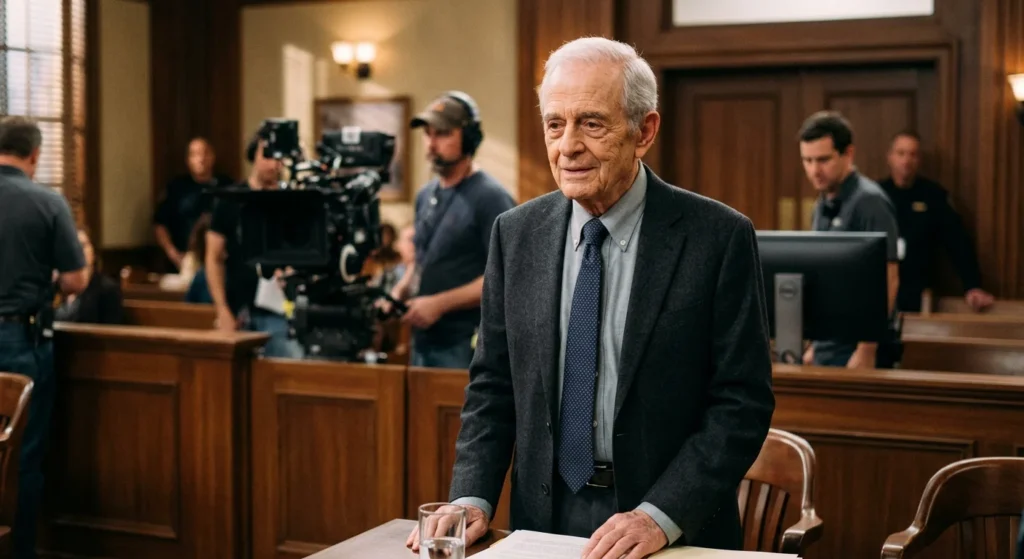
He also appeared in episodes of “CSI: Miami,” “Law & Order,” “The Blacklist,” “Elementary,” and “Curb Your Enthusiasm,” consistently playing world-weary professionals, power brokers, or elder statesmen. On Broadway, he returned to the stage as a performer rather than a manager, appearing in productions tied to Elaine May’s work later in his career.
Personal Life
Adler kept much of his personal life private throughout his career. He was married and had children, and he spoke publicly at times about balancing family life with the demands of theater and television production. He remained active in the industry well into his nineties, expressing interest in roles that reflected the realities of aging rather than sidelining older actors.
Jerry Adler’s Death
Jerry Adler died on August 23, 2025, at the age of 96. His family confirmed the news publicly that weekend. Tributes from colleagues and fans focused on both his decades of unseen work as a Broadway stage manager and his unexpected second act as a recognizable television actor starting in his sixties.
How Jerry Adler Built His Net Worth
Jerry Adler’s $4 million net worth came from two distinct income streams built across a seven-decade career. The first several decades came from steady, if less publicly visible, work as a Broadway stage manager, production supervisor, and director, roles that paid consistently but rarely made him a household name.
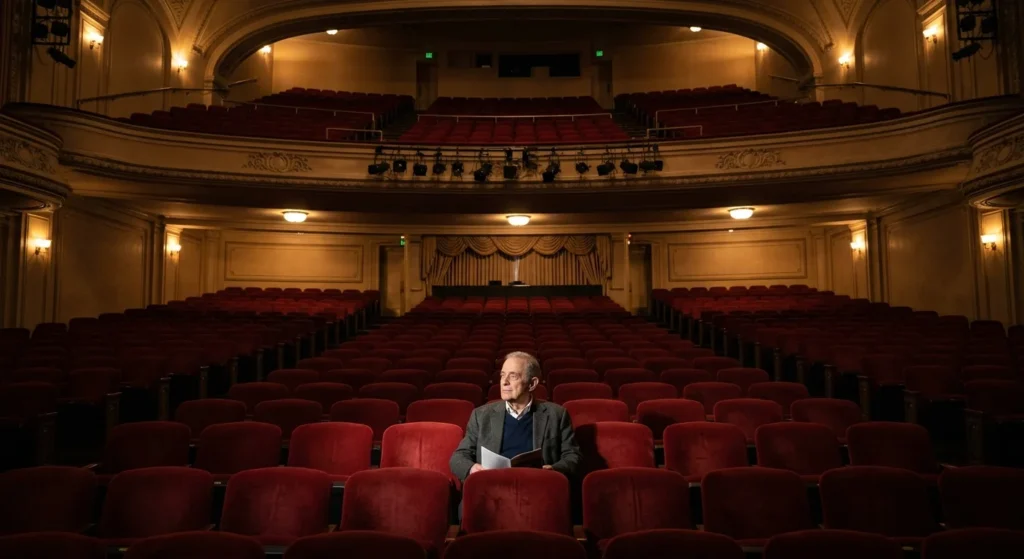
The second stream began in his sixties, when television and film work turned him into a recognizable character actor. Recurring roles on “The Sopranos,” “The Good Wife,” and “Rescue Me” provided the bulk of his later-career earnings, supplemented by film appearances and guest spots on procedural dramas. Estimates of his net worth have varied by source, with some placing it as high as $8 million, though Celebrity Net Worth’s $4 million figure, cited at the time of his death, is the most frequently referenced.
Awards and Industry Recognition
Adler did not build a career chasing trophies, and he never won a major acting award during his run on television and film. His recognition came instead through steady casting directors’ trust and repeat work with the same creative teams across decades.
His real industry recognition happened earlier, during his stage management years. Colleagues on Broadway regarded him as one of the most reliable production supervisors of his era, a reputation that opened doors when he later moved from managing shows to directing them. That behind-the-scenes credibility followed him into his acting career, where casting directors often knew him personally before he ever auditioned for a role.
Jerry Adler’s Family and Marriages
Adler married twice during his life. His first marriage was to Otis Adler, with whom he had children before the marriage ended. He later married Joan Laxman, and the two remained together for decades until she died in 2020.
He rarely discussed his family in interviews beyond brief mentions, preferring to keep the focus on his work. What he did share suggested a household shaped by the same theater world he came from, with several family members connected to New York’s stage and screen industry over the years.
Advocacy for Older Actors in Hollywood
In interviews later in his life, Adler became an informal voice for older performers working in an industry that often overlooks them. He pointed to his own trajectory, breaking into acting at an age when many actors are already winding down, as proof that meaningful roles do not have to end at a certain birthday.
He specifically pushed back on the idea that aging actors should accept smaller, thinner parts. Adler continued auditioning and working into his nineties, taking roles that reflected real complexity rather than background characters defined only by age.
Jerry Adler’s Lasting Legacy
Adler’s career left a mark on two separate corners of the entertainment industry. Broadway remembers him as a production figure who helped shape some of the era’s biggest musicals from behind the scenes, work that rarely gets public credit but shapes how a show actually runs night after night.
Television and film audiences know him differently, as the quiet, watchful presence behind characters like Hesh Rabkin. That dual legacy, decades of unseen stagecraft followed by a second career built on camera, makes his path uncommon even among veteran character actors.