
Rachel Horne is a Northern Irish journalist who presented the BBC children’s news programme Newsround from 2002 to 2006, moved on to BBC business reporting, and now works as an advocate for people living with multiple sclerosis. She also founded the Rachel Horne Prize for Women’s Research in MS, an international award worth US$40,000 a year.
Pages about her tend to cover one half of that story. Biography sites stop at the BBC years, while medical news covers the prize without saying much about the person behind it. This article follows both threads and keeps to what named sources have published.
Rachel Horne at a Glance
| Category | Details |
|---|---|
| Birth Name | Rachel Gibson |
| Birthplace | County Fermanagh, Northern Ireland |
| Career at Newsround | Presenter and reporter from 2002 to 2006 |
| BBC Career | Business reporter and presenter from 2006 |
| Husband | Alex Horne (married in 2005) |
| Health | Diagnosed with multiple sclerosis in 2009 |
| Initiative | Founder of the Rachel Horne Prize for Women’s Research in MS |
Early Career at the BBC
Rachel Gibson was born in County Fermanagh, Northern Ireland, according to her Wikipedia entry. Her early broadcasting work spread across several parts of the BBC. Wikipedia lists Breakfast with Frost, BBC Radio 5 Live and Newsbeat on BBC Radio 1, plus a later stint as a reporter on BBC Essex’s breakfast programme.
Newsround Years, 2002 to 2006
Newsround has aired on the BBC since 1972, according to TVmaze. Rachel joined CBBC’s Newsround in December 2002, according to Wikipedia. She worked alongside Lizzie Greenwood-Hughes, Thalia Pellegrini and Adam Fleming as part of the bulletin team and as the programme’s main reporter.
For a time she also presented Newsround Showbiz, a spin-off that ended in 2005. Wikipedia attributes its cancellation to poor ratings. She left Newsround in 2006.
Newsround is a news bulletin written for children, which means every story has to be explained without jargon and without talking down to the audience. It is a fair reading of her later work that the same habit shows up when she writes about life with MS for medical journals. That is an observation, not a claim any source makes.
Business News and Radio
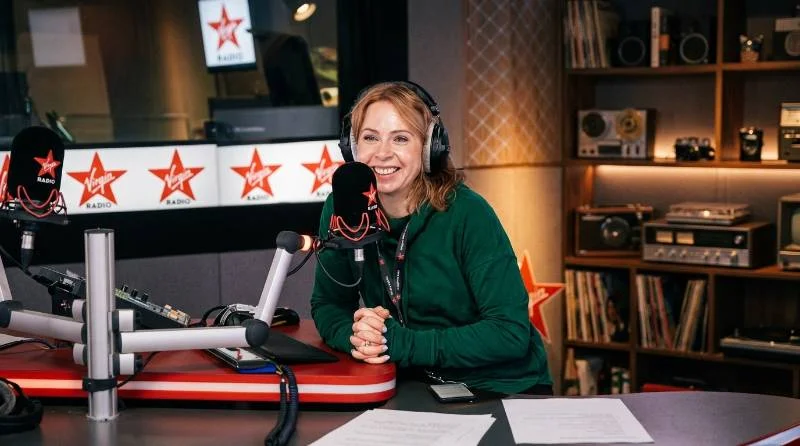
After leaving Newsround, Rachel joined BBC Two’s business programme Working Lunch as a business reporter in May 2006. By 2009 she had moved to the BBC News Channel’s business team, where she became a regular presenter, often taking the afternoon and evening shift.
In January 2019 she followed Chris Evans from BBC Radio 2 to Virgin Radio UK, alongside Vassos Alexander and other former members of the Radio 2 breakfast team. Wikipedia adds that she has since returned to Radio 2 on occasion to present travel news.
Rachel Horne and Alex Horne
Rachel has been married to comedian Alex Horne since 2005, according to Wikipedia. Alex is the creator of the British comedy series Taskmaster, in which contestants attempt unusual tasks, and Bustle has written about her under a headline calling her his biggest fan. Her own career sits in news and journalism, not comedy.
Diagnosis and a Second Career as a Patient Advocate
Rachel was diagnosed with multiple sclerosis in 2009, according to ECTRIMS and the University of Leeds. She used her journalism background to explore the disease from a patient’s point of view.
Her profile at Neurology Academy says she has written about MS for The BMJ, Nature Reviews Neurology, Annals of Neurology and the MS-Blog. The same profile lists her as an honorary research fellow at Queen Mary University of London.
She is also a regular voice in the MS community. In February 2023 the MS Trust podcast brought her together with fellow journalists Daf Wyn and Richard Sprenger to discuss how the media typecasts MS, and another MS Trust episode covered how she launched the prize. She has also moderated an ECTRIMS webinar with neurologists Lindsay Ross and Mar Tintoré, and hosted an MS Plus podcast episode on medical gaslighting.
One point needs care. Biographies of her broadcasting years and pages about her MS work are published separately, and none of the sources reviewed for this article states the link in so many words. The overlap is hard to miss, though. ECTRIMS and the University of Leeds describe her as a journalist, and the first prize winner, Rhonda Voskuhl, referred to her work in news and journalism when accepting the inaugural award.
The Rachel Horne Prize for Women’s Research in MS
The prize is an annual international award of US$40,000 for a woman scientist whose research has improved care or understanding of women’s health in MS. The recipient can spend the money however they choose, ECTRIMS states.
Rachel created it after spotting a gap in knowledge about women’s health in MS, a disease in which women make up about two thirds of diagnoses, NeurologyLive reported. The money comes from the Horne Family Charitable Foundation. ECTRIMS says her father set up the foundation in Canada in 2010, and that it gives to education, the environment, humanitarian work and medical causes.
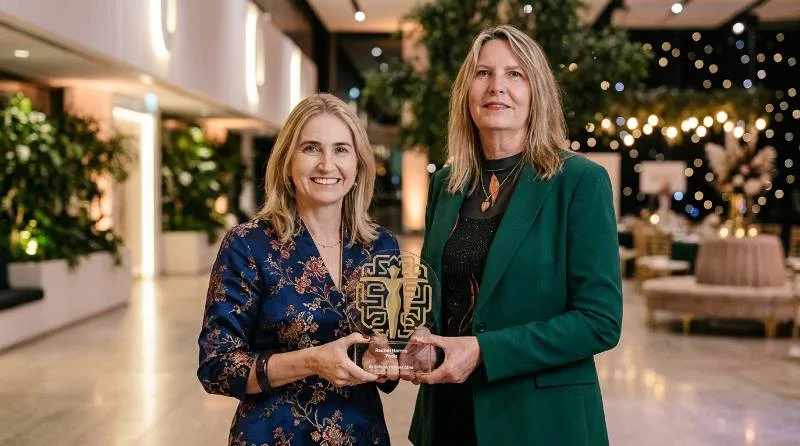
Entries are reviewed by International Women in MS (iWiMS), with support from ECTRIMS and ACTRIMS, the European and Americas committees for MS research.
The start date depends on the source. An ECTRIMS post for International Women’s Day in 2023 described the prize as launched at ECTRIMS 2022, while other ECTRIMS and NeurologyLive pages say it was established in 2023. The most likely reading is an announcement in October 2022 and a first award in 2023.
The Winners So Far
Four women have won so far, each announced around the annual ECTRIMS congress.
| Year | Winner | Work Recognized |
| 2023 | Rhonda Voskuhl, UCLA | Sex differences in MS susceptibility and progression |
| 2024 | Kerstin Hellwig | Clinical research on MS and pregnancy; founder of the German MS and Pregnancy Registry |
| 2025 | Kristen Krysko, Canada | Pregnancy and breastfeeding in MS; early to mid-career researcher |
| 2026 | Sandra Vukusic, University of Lyon | Pregnancy counseling and women’s health in MS |
Winners are celebrated at the ECTRIMS congress, which met in Milan in 2023, Copenhagen in 2024 and Barcelona in 2025.
A Closer Look at the First and Latest Winners
Rhonda Voskuhl, the first winner, directs the UCLA Multiple Sclerosis Program and holds its Skirball Chair for MS research, ECTRIMS says. Rachel’s own press-release comment credited her work on why women are about three times more likely than men to develop MS and on targeting treatments to slow progression. The press release figure of three times and NeurologyLive’s two thirds do not match exactly, so treat both as approximate.
Sandra Vukusic, the 2026 winner, is a professor of neurology at the University of Lyon. In her NeurologyLive interview, published 2 October 2026, she discussed pregnancy counseling, therapeutic inertia (delays in changing a treatment that is not working) and women’s health issues in MS that get too little attention.
What the Winners Reveal
Pregnancy runs through the last three awards. Hellwig founded the German MS and Pregnancy Registry, Krysko studies how to guide and treat women with MS during pregnancy and breastfeeding, and Vukusic discussed pregnancy counseling in her NeurologyLive interview.
That pattern suggests pregnancy care is where women with MS face some of the least settled questions. The prize materials do not say so directly, so it is a reading of the winners and nothing official.
The eligibility rules also change each year. The 2024 call asked for clinical research that improved patient care, 2025 went to an early to mid-career scientist, and the 2026 call asked for an established senior researcher.
How the Prize Process Works
Applications open in the spring. The 2026 call opened in March, around International Women’s Day, and ECTRIMS said in 2023 that nominations could be sent through June. Entries go through an online portal on the official prize website.
The winner is announced around September. Press releases are dated 3 September 2024 and 2 September 2025, and the 2026 winner’s release is dated 30 September 2026.
Because each year’s call differs, a past winner’s profile is a poor guide to the next one. Applicants should read the current criteria before preparing anything.
Funding Research Beyond the Prize
The prize is not her only research funding. The University of Leeds lists her as a researcher and funder on its project about domestic violence and abuse among women with MS.
A November 2024 NeurologyLive feature reported that the Horne family foundation planned to fund the initiative, with its first phase giving grants to two PhD students to gather and analyze data. The same article quotes Helen Ford, an MS specialist in England, saying the COVID-19 lockdowns made her realize how exposed her patients were to abuse.
Why Women’s Health in MS Needs Its Own Research
MS affects the nervous system, and ECTRIMS lists its symptoms as ranging from numbness and tingling to problems with vision, thinking and mobility. Women account for roughly two thirds of people diagnosed, according to NeurologyLive, yet Emmanuelle Waubant, who chaired iWiMS when the prize began, has said women researchers were long overlooked for work on women’s health in MS.
Pregnancy and breastfeeding are questions only women face, and they appear often among the winners. Domestic violence and abuse is another topic the Leeds project treats as an MS issue.
What Sets Her Path Apart
Rachel’s route runs from a children’s news desk to business reporting, then to a diagnosis, and on to a prize that puts women scientists in the spotlight. NeurologyLive says she created the prize after seeing a gap in knowledge about women’s health in MS. Spotting what a story leaves out is a journalist’s habit, and it is a reasonable way to read her choice, though she has not described it that way in the sources reviewed.
Sandra Vukusic, the 2026 winner, told NeurologyLive she was grateful to Rachel and her family for turning attention to women in science and to women’s health.
The prize has limits worth stating. One award of US$40,000 a year cannot pay for a large clinical trial, and the winner decides how to spend it. What it does offer is visibility, with judging by iWiMS and the support of ECTRIMS and ACTRIMS.
Name Mix-Ups to Avoid
Several people share this name or something close to it. Posts from an illustrator named Rachel Horne appear in online art forums, and nothing connects that person to the journalist. The British novelist Rachel Hore has a near-identical surname. Checking the profession against the details above keeps the right person in view.
Where to Follow Her Work
The official source for prize news is rachelhorneprize.com, the address listed in ECTRIMS press releases and in the show notes of an MS Trust podcast episode. ECTRIMS also posts each call for submissions and winner announcement on its own site, and NeurologyLive covers the winners in interviews.