
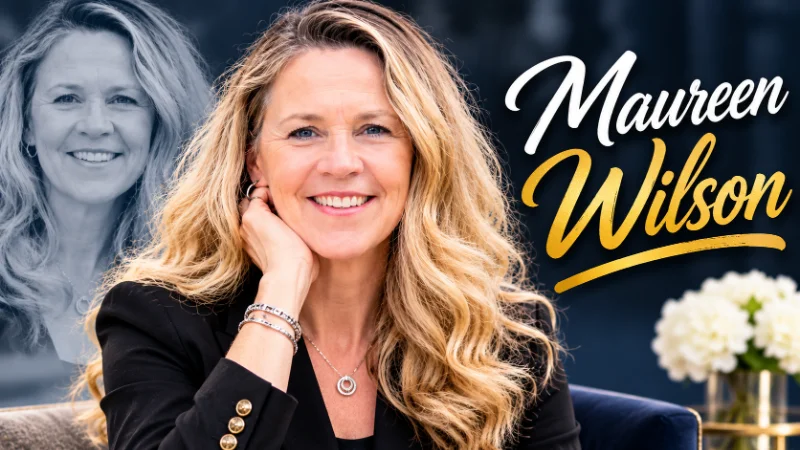
Maureen Wilson is a Canadian municipal politician who represents Ward 1 in Hamilton, Ontario. She became a familiar name in local politics through her work on housing, public spaces, transportation, neighbourhood improvements, and community development. Before entering elected office, she built a career in local and regional government, gaining experience in public administration and urban planning.
Her professional background gives her a connection to many of the issues facing Hamilton residents, including how neighbourhoods grow, how public money is used, and how city services respond to changing community needs. She has also developed a public profile through her involvement in local initiatives and her regular communication with residents.
Understanding her career requires looking beyond election results. Her experience in municipal government, approach to neighbourhood issues, and work on Ward 1 projects help explain why she has become a recognizable figure in Hamilton’s civic life.
Who Is Maureen Wilson?
Maureen Wilson is a Hamilton City Councillor for Ward 1 in Ontario, Canada. She was first elected to Hamilton City Council in 2018 and won re-election in 2022. Her work focuses on municipal issues that affect residents in their everyday lives, including housing, transportation, public infrastructure, parks, and community services.
Before becoming a councillor, Wilson worked in senior positions within Hamilton’s local and regional governments. She also served as chief of staff to former Hamilton mayor Bob Wade for two years following municipal amalgamation. This experience gave her an understanding of how municipal decisions are developed, discussed, and put into practice.
Her educational background includes master’s degrees in Urban Planning and Political Science. These qualifications connect directly with her work in local government, where decisions about land use, public investment, and neighbourhood development require an understanding of both planning and public policy.
Early Life and Educational Background
Public information about Wilson’s childhood, birthplace, and early family life is limited. Her publicly available professional biography provides more detail about her education and career than her personal history, so claims about her early years should not be treated as established facts without additional sources.
Her academic background includes graduate-level study in Urban Planning and Political Science. Both subjects are closely connected to municipal government. Urban planning examines how communities develop, how land and public spaces are used, and how transportation and housing fit together. Political Science provides a foundation for understanding public institutions, government decisions, and the relationship between elected representatives and the people they serve.
These fields are relevant to the responsibilities of a city councillor. Hamilton faces questions about housing supply, infrastructure maintenance, environmental protection, and the use of public land. Wilson’s educational background provides context for her interest in these areas.
Her career also shows a long-standing connection to Hamilton’s public institutions. Rather than entering municipal politics without government experience, she brought knowledge of local administration into elected office.
Career Before Entering Hamilton City Council
Before becoming an elected representative, Wilson worked in senior staff positions in Hamilton’s local and regional governments. Her experience included public administration and work connected to municipal leadership. These roles helped her understand the responsibilities of city departments and the processes involved in delivering public services.
One notable part of her earlier career was serving as chief of staff to Mayor Bob Wade for two years immediately following Hamilton’s municipal amalgamation. Amalgamation brought several former municipalities together under one city government, creating new administrative and political responsibilities. Working during this period gave Wilson experience with the challenges of coordinating public services across a larger municipality.
Her background is relevant because city councillors regularly deal with decisions that involve several departments. A road improvement, for example, can involve transportation planning, construction schedules, public consultation, and budget approvals. Experience inside municipal government can help an elected representative understand how these processes work.
She later brought this knowledge into her own elected role, where residents could approach her office about neighbourhood concerns and city-wide policies.
Entering Politics and Winning Election in 2018
Wilson entered elected municipal politics in 2018, when she was first elected to represent Ward 1 on Hamilton City Council. Her campaign focused on practical local concerns, including neighbourhood development, public spaces, transportation, and the quality of municipal services.
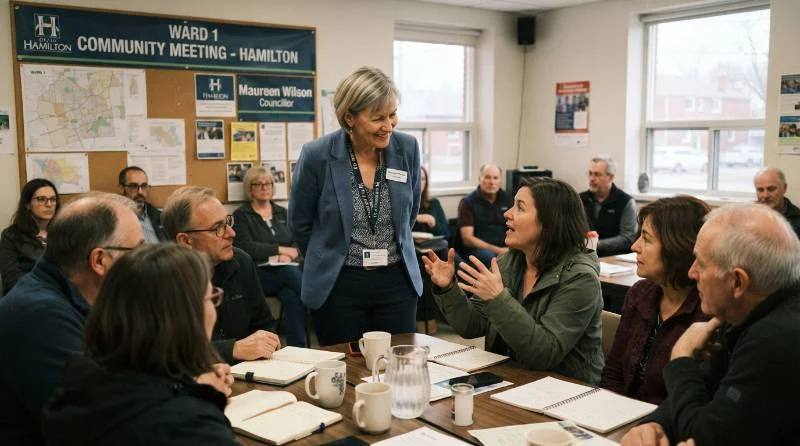
Ward 1 includes several established Hamilton neighbourhoods, such as Ainslie Wood, Kirkendall, Strathcona, and Westdale. These areas have different residential needs, infrastructure conditions, and community priorities. Representing the entire ward requires balancing local requests with decisions that affect Hamilton as a whole.
Her election also marked a change from working within municipal administration to making decisions as an elected public representative. Councillors participate in debates, vote on city policies, review spending proposals, and communicate residents’ concerns to municipal staff.
Wilson was re-elected in 2022 with 75% of the vote, according to her published professional biography. The result gave her another term to continue working on neighbourhood and city-wide issues.
Her Responsibilities as Ward 1 Councillor
A city councillor’s work involves more than attending council meetings. Representatives must consider local concerns, participate in committees, review municipal plans, and work with city staff to address problems that affect residents.
For Wilson, Ward 1 includes communities with different priorities. Some residents may be concerned about traffic and pedestrian safety, while others want improved parks, better public transit, or more affordable housing. Infrastructure maintenance is another regular concern because roads, sidewalks, and public facilities need ongoing investment.
The City of Hamilton identifies Ward 1 as an urban area in the city’s west end, below the Niagara Escarpment. It includes important local destinations and institutions, such as Dundurn National Historic Site, McMaster University, and Chedoke Civic Golf Course.
Her responsibilities therefore cover both small neighbourhood improvements and broader policy discussions. A sidewalk repair may address an immediate safety concern, while a housing policy can affect the future development of the entire city.
Focus on Affordable Housing and Community Development
Housing affordability has been one of the subjects Wilson has discussed during her time in office. Like many Canadian cities, Hamilton faces pressure to provide housing that residents can afford, including rental homes, supportive housing, and options for people who cannot easily enter the property market.
Wilson has supported affordable housing developments and policies intended to increase the supply of suitable homes. Her published policy positions also discuss inclusive zoning and stronger tenant protections.
She has argued that municipal government must work with provincial and federal governments because housing responsibilities and funding are shared across different levels of government. This is an important distinction when discussing the subject. A city councillor can support local development policies and approve municipal decisions, but cannot independently control every part of the housing market.
Her 2025 public newsletter reported that Hamilton had made a $58.4 million land investment between 2024 and 2026 to support projects intended to create more than 2,100 affordable units, including supportive housing and attainable homes. These figures describe city-wide housing initiatives, not homes personally built by Wilson.
The issue remains closely connected to her wider approach to community development. Housing decisions influence neighbourhood services, transportation demand, local businesses, and the availability of public facilities.
Safer Streets and Better Transportation
Street safety and transportation have also received attention during Wilson’s time on council. Residents depend on safe roads and sidewalks for daily activities, whether they are travelling to work, taking children to school, cycling, or visiting local businesses.
Her published accomplishments page describes work involving road reconstruction, pedestrian signals, raised crosswalks, speed cushions, and sidewalk improvements. These projects are intended to make neighbourhood streets easier and safer to use.
The campaign’s accomplishment figures report 49 kilometres of resurfaced or reconstructed roads, 118 speed cushions, 38 bumpouts and curb extensions, and 14 raised crosswalks. These are figures published by her campaign, so they should be understood as campaign-reported project totals.
Her transportation interests also include cycling infrastructure and public transit. She has supported better connections for people who use different forms of transportation, rather than treating streets as spaces used only by private vehicles.
This work involves practical questions. A raised crosswalk can help slow traffic near a school or park, while a protected cycling route can give riders a more separated space. These measures require planning, funding, and coordination with municipal departments.
Parks, Green Spaces, and Public Facilities
Public parks are another area of interest in Wilson’s municipal work. Hamilton’s neighbourhood parks provide places for recreation, outdoor activities, community gatherings, and access to green space. Keeping these facilities in good condition requires regular maintenance and investment.
Her published Ward 1 project information includes improvements to Victoria Park, Churchill Park, Alexander Park, and Mapleside Park. Projects include playground renewals, upgraded lighting, new seating areas, pathways, public art, and improvements to recreational facilities.
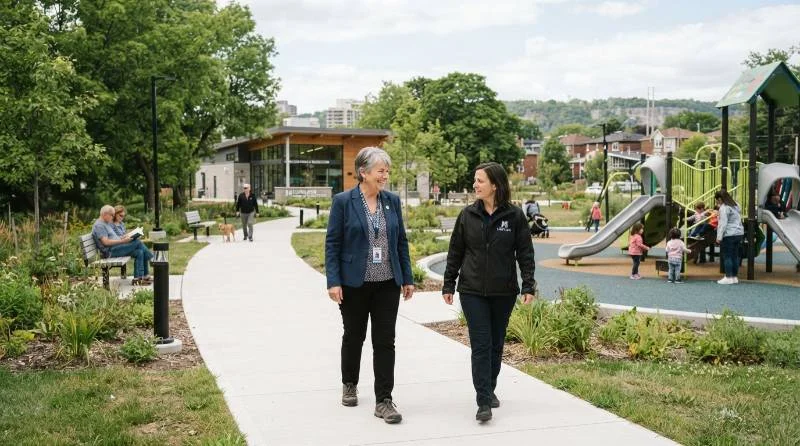
One example is the Alexander Park Community Hub project, which involved renewing the former park fieldhouse to provide an accessible, multipurpose community space. The project was listed as completed in August 2026 on her campaign’s infrastructure updates.
Victoria Park has also been included in several improvement projects, including a splash pad, seating areas, lighting upgrades, and recreational facilities. These projects show how neighbourhood investment can improve the everyday use of public spaces.
Public washrooms are another part of this work. Wilson’s published accomplishments list accessible, year-round public washrooms at Alexander Park and Victoria Park. Such facilities can make parks more practical for families, older residents, and people with different accessibility needs.
Supporting Local Businesses and Neighbourhoods
Local businesses contribute to the character and economic activity of Hamilton’s neighbourhoods. Independent shops, restaurants, and service providers create jobs and give residents convenient places to shop and meet.
Wilson has included support for local businesses among her municipal priorities. One challenge for neighbourhood businesses is construction. Road repairs and infrastructure projects can sometimes restrict access, reduce parking availability, or make it harder for customers to reach shops.
Her published motions include a proposal for a business-friendly construction policy. The purpose is to improve how businesses and customers experience city-led construction work.
She has also discussed the importance of strengthening Hamilton’s commercial and industrial tax base. A broader economic base can help reduce pressure on residential property owners and renters, although the actual impact depends on municipal budgets, development decisions, and economic conditions.
This approach connects economic development with neighbourhood planning. Local businesses need functioning streets, accessible public spaces, and a community with enough residents and visitors to support commercial activity.
Committee Work and Public Policy
Wilson’s municipal experience also includes participation in council committees and advisory groups. During her first term, her published biography lists involvement with the Audit, Finance and Administration Committee, General Issues Committee, Hamilton Board of Health, and Affordable Housing Site Selection Sub-Committee.
She has also been involved with the Advisory Committee for Immigrants and Refugees, the Hamilton Centre for Civic Inclusion, and the city’s LGBTQ advisory committee.
Committee work gives councillors opportunities to examine particular subjects in greater detail. Financial committees review spending and administrative matters, while health and housing groups consider policies that affect residents across the municipality.
Her published motions have covered several areas of public policy, including:
- Improving the efficiency of housing approvals and building permits.
- Tracking the progress of major infrastructure projects.
- Helping homeowners navigate accessory dwelling unit approvals.
- Examining gender safety in public spaces.
- Improving construction practices around local businesses.
- Reviewing the use of property controls that may contribute to neighbourhood food deserts.
These subjects show the range of municipal responsibilities involved in her work. They also demonstrate that a councillor’s role includes policy development and oversight, not simply responding to individual complaints.
Personal Life, Husband, and Family
Wilson keeps much of her personal life outside the public spotlight. Her professional biography provides some information about her family, although it does not offer a detailed account of her childhood or private relationships.
She is married to Terry Cooke, and the couple have three children. Her published biography states that they raised their children together in Ward 1 and that the children attended schools in the same area.
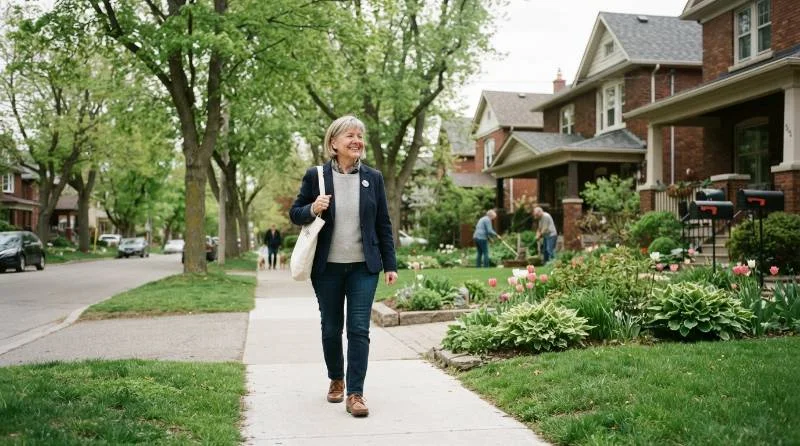
Her connection to the ward is also reflected in her personal interests. She enjoys walking and cycling, gardening, and supporting independent local businesses.
These interests have a natural connection to the issues she discusses in public office. Walking and cycling are closely related to neighbourhood accessibility, while gardening and green spaces connect with environmental protection and public park improvements.
However, her private family life should be kept separate from her political record. There is no need to speculate about her children’s identities, personal careers, or other private matters that have not been publicly documented.
What Makes Her Municipal Career Notable?
One notable feature of Wilson’s career is the combination of municipal administration experience and elected public service. Her earlier government positions gave her familiarity with how city institutions operate, while her council role placed her in a position to participate directly in public decisions.
Her work also covers issues that are closely connected. Housing development requires suitable infrastructure, safe streets make neighbourhoods more accessible, and attractive public spaces can support community activity and local businesses.
Another aspect of her public work is the use of newsletters and project updates to communicate with residents. Her official updates include information about construction schedules, park improvements, city decisions, and local services. This type of communication helps residents follow projects that may affect their daily routines.
It is important to distinguish between proposed initiatives, completed projects, and work that is still underway. A councillor may introduce a motion or advocate for a project, but its final delivery can depend on council approval, municipal budgets, contractors, and other government departments.
That distinction provides a more accurate way to understand her record than treating every announced plan as a completed achievement.
Maureen Wilson’s Current Work in Hamilton
Wilson continues to be listed by the City of Hamilton as the Ward 1 councillor. Her public work includes communication about neighbourhood infrastructure, municipal decisions, housing, and community facilities.
Her campaign website also records her intention to seek another term in the October 26, 2026 municipal election. The election date and campaign information are separate from confirmation of an election result.
Her official newsletters provide updates on issues such as road resurfacing, lane disruptions, winter recreation programs, park projects, and city legislation. These updates offer a useful picture of the practical matters that occupy a municipal representative’s work.
For residents, the most direct way to understand her current responsibilities is to look at the City of Hamilton’s Ward 1 information and her published council updates. These provide details about the ward, municipal contact arrangements, and current local projects.
The wider story of her career is rooted in municipal government. From her earlier administrative work to her election in 2018 and subsequent re-election, Wilson’s public profile has developed around the everyday decisions that shape Hamilton’s neighbourhoods.