
Carol Bryan is an American former model and patient advocate who lost the sight in her right eye after a 2009 filler procedure, then founded Saving Face to promote aesthetic safety. She went through seven reconstructive surgeries between April 2013 and September 2016. Her story reached a wide audience when she appeared on the CBS talk show The Doctors in January 2017.
Most pages about her stop at the shocking photos. This article covers what happened, where sources disagree, what Saving Face set out to do, and what her case means for anyone weighing facial injectables. Where the public record is silent, it says so.
Carol Bryan at a Glance
| Category | Details |
|---|---|
| Known For | Surviving severe complications from facial fillers and founding Saving Face |
| Background | Originally from Miami, Florida, with a background in modeling and the beauty industry |
| Surgeon | Dr. Reza Jarrahy of UCLA |
| Organization | Saving Face, an initiative of Face2Face Healing |
| Age | Not publicly confirmed |
| Date of Birth | Not publicly confirmed |
Her Background Before 2009
Bryan is originally from Miami, Florida, according to a January 2017 press release announcing Saving Face. The release says her years in modeling and the beauty industry, including anti-aging aesthetic practices, gave her a platform to speak about procedure risks. AZ Family later described her as a former model.
HuffPost UK reported that she began Botox injections around her eyes in her thirties and liked the early results. In 2009 she decided to go a step further with dermal fillers. That decision is where almost every public account begins. By the time Saving Face was announced, the release says she was living in Los Angeles with her daughter.
What Went Wrong After the 2009 Filler Procedure
About three months after the injections, Bryan told The Doctors, her face seemed to expand and contract. Her forehead grew so heavy that it affected her vision, and she taped her eyes open to walk without bumping into things.
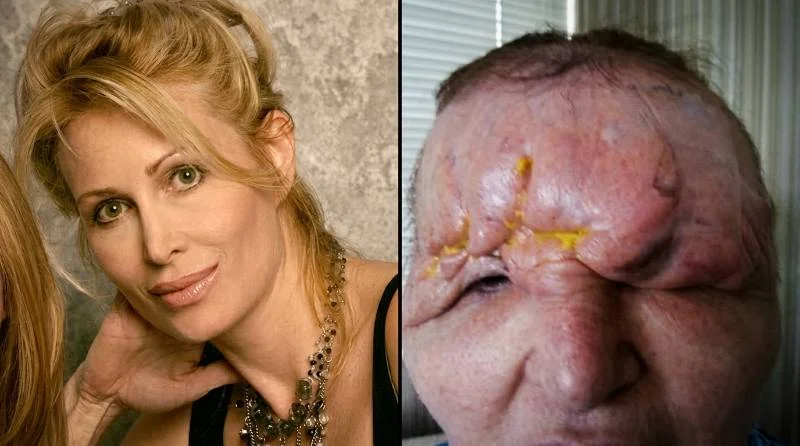
The American Society of Plastic Surgeons (ASPS) says she had been treated by a cosmetic doctor who was not a plastic surgeon and not board-certified. According to ASPS, he injected her aggressively, used questionable techniques, and used materials the FDA had not approved. That’s Life reported that two fillers, including silicone, went into her forehead.
Andrew Ordon, a Beverly Hills plastic surgeon who discussed the case on the show, pointed to permanent silicone fillers as the source of the first complications. Corrective procedures followed and, in her words, made the damage worse. She stopped going out and hid her face from friends and family.
Carol Bryan Timeline
- 2009: Receives facial fillers, then develops swelling and distortion
- 2009 to 2013: Undergoes corrective procedures that worsen the damage
- April 2013: Has her first UCLA surgery and loses sight in her right eye
- October and December 2013: Has further operations, according to Pourquoi Docteur
- September 2016: Completes the seventh surgery counted by ASPS
- January 2017: Appears on The Doctors and announces Saving Face
How She Found a Surgeon Willing to Help
By 2013, her daughter had seen enough. Bryan told ASPS that after three and a half years of failed corrections, her daughter begged her to get help.
The 2017 press release says her daughter and a friend contacted teaching hospitals across the country, and only one agreed to take the case. Dr. Reza Jarrahy, co-director of the UCLA Craniofacial Clinic, said he would help but warned of unknown risks because the case was unprecedented. Bryan told ASPS that no other doctor was willing.
The Reconstructive Surgeries at UCLA
Her first operation, in April 2013, was a forehead lift meant to improve her vision enough to walk safely. She has said she went irreparably blind in her right eye during that surgery.
Dr. J. Brian Boyd, a board-certified plastic surgeon and chief of plastic surgery at Harbor-UCLA Medical Center, worked alongside Jarrahy, according to the press release. The NZ Herald reported that surgeons took fat from her back and grafted it onto her face to rebuild her forehead. ASPS counts seven reconstructive surgeries between April 2013 and September 2016.
Pourquoi Docteur, a French outlet, described a second operation in October 2013 and a third in December 2013, with two more in 2014 and 2015. Elite Daily reported that her face could never return to its original appearance.
Why Her Story Spread So Widely
The images did most of the work. Before-and-after photos from The Doctors circulated through outlets such as the NZ Herald, HuffPost UK, Mamamia, and Complex within days.
Coverage then crossed languages. French, Spanish, and Italian outlets ran their own versions, which is why searches for her name still return pages in several languages. Many of those pages repeat the same details, including the same errors.
Why Accounts of Her Story Do Not Match
Read enough coverage and the numbers start to drift. These are the differences worth knowing:
- Age: NZ Herald, HuffPost UK, and Elite Daily say she was 54 at the time of the fillers, NewBeauty says 45, and a Spanish-language outlet says 47.
- Time in isolation: She told ASPS three and a half years, the press release says four years, and Elite Daily says six.
- Number of surgeries: ASPS lists seven, while the 2017 press release says eight.
- Her daughter’s name: That’s Life uses Sophie and ASPS uses Sofia.
- Saving Face launch: ASPS quotes her saying 2016, and the public announcement came in January 2017.
This article leans on her own ASPS interview and the original press release, because they sit closest to the source. It leaves her age out until a primary source confirms it.
From Patient to Advocate: What Saving Face Does
Bryan told ASPS she launched Saving Face in 2016 after finding no organization in the United States that supported or advocated for aesthetic safety. She has described her story as a warning for anyone who goes into a procedure without knowing the doctor’s training or the materials being injected.

The January 2017 announcement lists three goals: advocate for safe medical aesthetic practices, support people harmed by procedures, and give information to anyone considering a facial treatment. Planned resources included advice on choosing a clinician, questions to ask beforehand, and a blog written by Bryan. She said that protecting even one face would mean the mission had worked.
The advisory board named in the release included Jarrahy, Boyd, Dr. Patrick Treacy of the Ailesbury Clinic in Dublin, and life coach Cathleen Madrid.
Face2Face Healing and Her Wider Role
Bryan was West Coast Director of Face2Face Healing, a nonprofit support network for people with facial or bodily disfigurement, per the release. Executive Director Karen Scuilli said Bryan found the group through an internet search while coping with her own disfigurement.
GuideStar lists Face2Face Healing in Wexford, Pennsylvania, and CBS Pittsburgh reported that it has helped hundreds of patients worldwide. Saving Face was set up as one of its initiatives.
Media Coverage and Recognition
The Doctors aired her segment on January 18, 2017, and she also appeared in Woman’s Health. The Independent published an interview the same day and reported that she had sworn off cosmetic surgery.
Mamamia included her case in a roundup of cosmetic surgery horror stories and framed her work with Jarrahy as the start of a new calling. ASPS profiled her in a Patient of Courage feature on its consumer pages, where Jarrahy explained what went wrong and how he repaired part of the damage.
What Her Case Shows About Choosing a Provider
Her story is one patient’s account, so treat these points as starting places and not medical advice. A licensed clinician should answer questions about your own face and health.
Three details from the record matter most. The injector in her case was not a board-certified plastic surgeon. The materials were reportedly not FDA approved. And silicone, which is permanent, was named by Ordon as the source of her first complications.
Yahoo Beauty’s coverage advises patients to find a board-certified dermatologist or plastic surgeon and to learn filler types, brand names, and manufacturers. AZ Family reported that ASPS counted more than 3.4 million injections in 2020, with hyaluronic acid the most popular filler base. A plastic surgeon quoted there said detailed knowledge of facial anatomy is essential because the face has a dense network of blood vessels.
Questions Worth Asking Before Any Filler Treatment
- Is the injector a board-certified plastic surgeon or dermatologist?
- Which exact product will be used, and who makes it?
- Is the product FDA approved?
- Is the filler permanent or temporary?
- What is the plan if swelling, pain, or vision changes appear after treatment?

The Wider Push for Aesthetic Safety
Regulators and professional bodies have moved on filler safety since her story broke, though no source reviewed connects those changes to her advocacy. England banned remote prescriptions for non-surgical cosmetic treatments from June 1, 2025, so prescriptions now have to be given face to face. That same month, Australia’s health practitioner regulator announced guidelines for dentists and nurses who perform cosmetic injectables.
In the United States, an ASPS presentation to the FDA in 2025 described the society as committed to promoting best practices in dermal filler use. Bryan’s central argument, that patients need to know who is injecting them and with what, sits comfortably inside that conversation.
Do Not Confuse Her With Other Saving Face Groups
Several unrelated organizations share the name. A national oral cancer nonprofit called Saving Face is based in Saint Petersburg, Florida, and a med spa called Saving Face operates in Austin, Texas. Save Face is a separate UK register of aesthetic practitioners accredited through the Professional Standards Authority.
None of the sources reviewed link these groups to Bryan’s initiative, which began under Face2Face Healing. Searches for her name also surface obituaries for other women named Carol Bryan, along with pages about Bryan Cranston and Carol Bryant.
What Is Not Publicly Confirmed
Her birth date and age are not confirmed by a primary source. Recent coverage of her work was not found in the sources reviewed, so her current role at Saving Face or Face2Face Healing is unverified.
Income, net worth, and relationship status are not publicly documented either. Her daughter has appeared in coverage, but details about family life beyond that are best left to Bryan herself.
Why Her Story Still Matters
Bryan turned a private ordeal into a public safety message while she was still recovering. Her case gives readers a concrete example of what to ask before an injectable.
Balance matters here. A Springer collection on facial aesthetic complications notes that safety profiles have improved with better techniques and materials, though complications still occur. Her experience is one documented case and not a prediction for every patient.
What sets her apart from other botched filler stories is what came after the photos: a nonprofit initiative, an advisory board of surgeons, and a steady call for patients to check credentials.